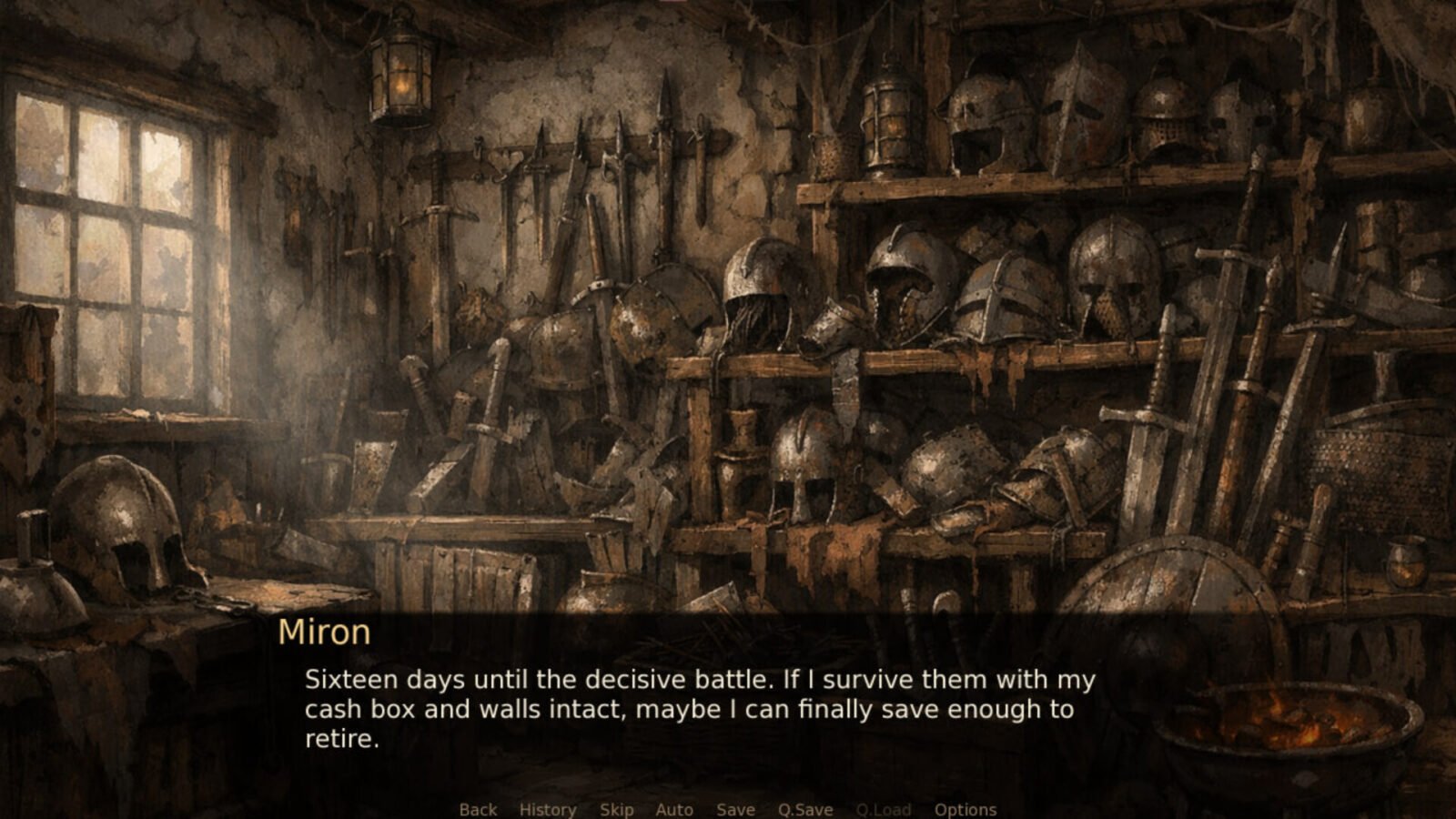
Steam has always been one of the best places to discover interesting indie games. For every major release, there are dozens of smaller projects created by developers with original ideas, unusual mechanics, and a genuine passion for what they do.
However, discovering great smaller games has also become noticeably harder. The growing availability of generative AI tools has made it easier to produce images, voices, and other types of content at speed. That technology can be genuinely helpful for small teams and solo creators who do not have the resources of a major studio.
There is another side to this shift, though. More store pages now showcase cheap, low-effort asset flips that rely heavily on AI-generated content while offering very little proof of real gameplay, thoughtful design, or lasting value. Even stranger, some of these projects arrive with surprisingly high price tags, leaving players wondering what exactly they are paying for.
Before going any further, one distinction matters. Using AI does not automatically make a game an asset flip, nor does it prove that the developers did zero work. Our concern is not simply that a studio touched an AI tool. The real problem is what happens when a release relies heavily on generated content, provides almost no convincing look at the actual experience, and asks players to pay premium prices.
Here are the clearest warning signs to check before you spend your money on an unfamiliar Steam release.
Real Examples of the $100 AI-Generated Game Problem
Three particularly unusual releases on Steam show why players need to pay close attention before clicking buy: Blood in the Ice, KRYONULL, and Typical NPC. All three carry roughly $100 price tags, lean heavily on AI generated content, and raise fair questions about how their asking prices match the experience being offered.
Their prices and heavy reliance on generated content are verifiable facts. By themselves, those details do not prove that the developers put in zero effort or that the games are scams. The far more practical question for players is simple: do these store pages give you a convincing reason to spend around $100?
Blood in the Ice
Blood in the Ice, developed and published by KalendulaGames, was released on May 30, 2026.
The game pitches a dark historical mystery set aboard a stranded Arctic whaling ship in 1859. That is a premise with real potential for a visual novel when backed by strong writing, atmosphere, and memorable character development.
However, its Steam disclosure states that all images in the game, along with the images on its store page, were generated using AI. Its listed storage requirement is 256 MB, and its minimum system requirements go all the way back to older operating systems like Windows XP, Windows 7, and Windows 8.
None of those technical details automatically make a visual novel bad. A compact story game does not need massive file sizes, and generated artwork alone does not tell you how much time went into the script. Still, when a developer asks $99.99 without giving players an equally compelling breakdown of what makes the experience worth that investment, skepticism is completely justified.
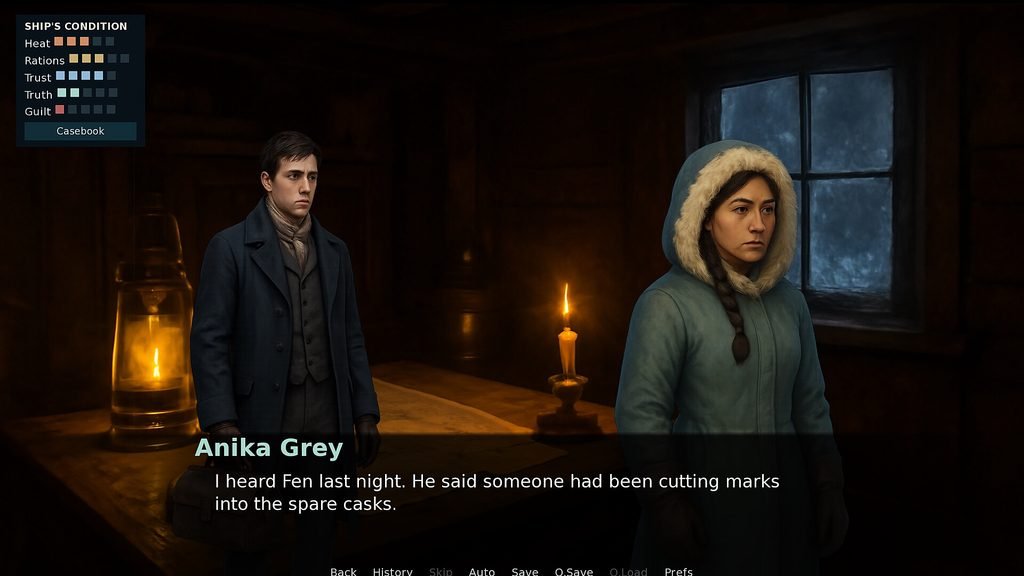
Image source: Steam
KRYONULL
Just two weeks later, on June 13, 2026, another visual novel called KRYONULL arrived on Steam. Developed and published by NovelkaGames, it moves the setting to Europa, one of Jupiter’s moons, for a science fiction story.
Like Blood in the Ice, it carries a $99.99 USD price tag. Its Steam AI disclosure goes even further, stating that all images and voices in the game, as well as the store page artwork, were generated using AI. Its storage footprint sits at 250 MB, paired once again with older Windows minimum requirements.
The parallels between the two releases are hard to ignore. Both are compact visual novels, both carry triple-digit price tags, both disclose heavy reliance on generated content, and they launched just fourteen days apart.
Even so, similarities are not proof of a shared developer, a coordinated release strategy, or an intent to deceive customers, and we should never make accusations without solid evidence. What every player can reasonably question is the pricing. A $99.99 tag puts a game in territory where buyers expect extraordinary production value, deep content, or a truly unforgettable experience. When there is a massive gap between what a store page asks you to pay and what it actually shows you, walking away is the smartest move.
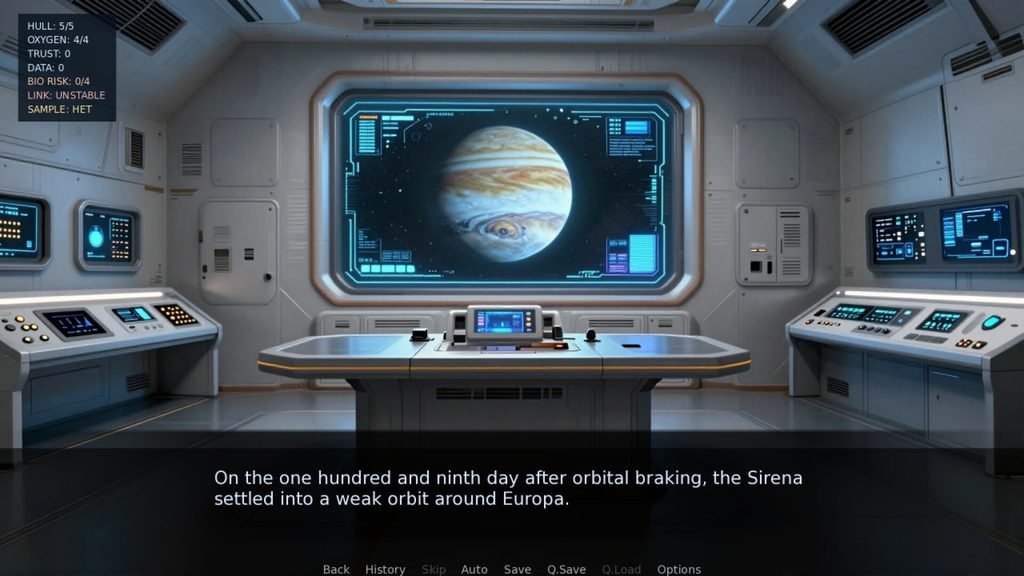
Image source: Steam
Typical NPC
Typical NPC adds another striking example to this growing pattern. Just like the previous two titles, it arrived on Steam with a $100 price tag while relying heavily on AI generated content throughout its presentation.
What makes Typical NPC especially worth noting alongside Blood in the Ice and KRYONULL is that it shows triple digit pricing for heavily AI assisted releases is not an isolated fluke. Whether a studio sets a $100 price to spark online curiosity, prepare dramatic future discounts, or simply test how much players are willing to pay, the takeaway for buyers remains the same.
We do not need to assume bad intentions behind any of these releases to question their value. A $100 price tag puts a game in territory where buyers expect extraordinary production value, deep content, or a truly unforgettable experience. Whenever there is a massive gap between what a store page asks you to pay and what it actually shows you, walking away is the smartest move.
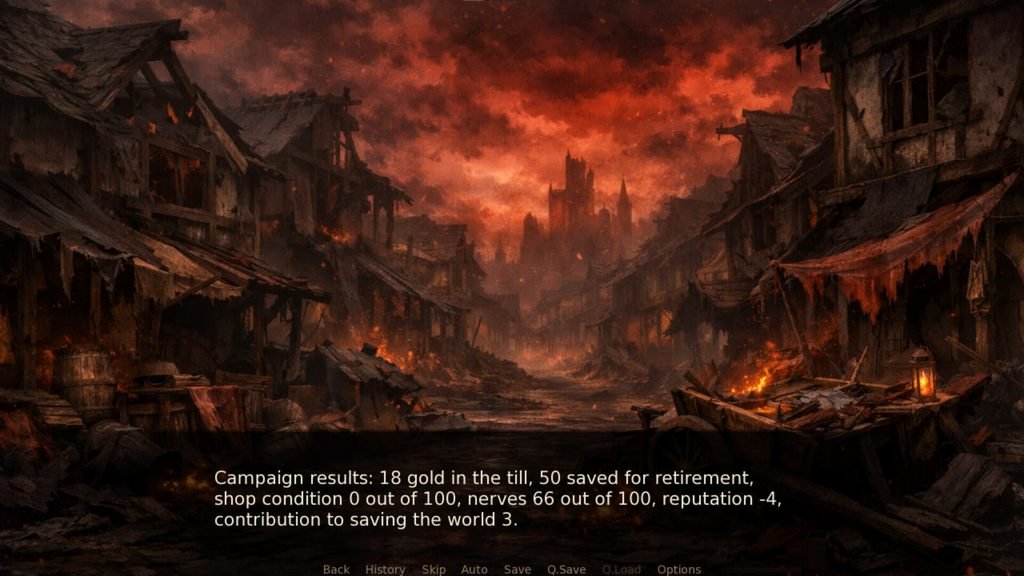
Image source: Steam
AI Does Not Automatically Mean Zero Effort
Before diving into the checklist, it is worth acknowledging a truth that often gets buried in online debates. Making a working video game is genuinely hard.
Even with generative AI tools available, developers still have to handle game structure, pacing, writing, interface layout, testing, and overall presentation. Generating an image is not the same as designing an entire game around it, a distinction we explored closely in Why AI Cannot Replace Game Design. Turning separate pieces into a cohesive, enjoyable product takes real skill, especially since AI-generated visuals and voices frequently clash in style and tone.
When a developer puts in the hard work to overcome those challenges, stays honest with players, and delivers a fun experience at a fair price, that effort deserves fair judgment. The red flags below are specifically meant to help you spot projects that offer little beyond raw generated assets while asking for far more than they deliver.
1. Compare the Store Artwork With Actual Gameplay
One of the fastest ways to evaluate an unfamiliar title is to compare its promotional banner with its actual in-game screenshots and footage.
A dramatic, hyper-detailed cover image can easily create an impression that the real game fails to match. If the main artwork looks like a big-budget cinematic release, yet the gameplay screenshots look stiff, empty, or disconnected, take a much closer look.
Pay attention to visual warning signs such as:
- Characters whose faces, hairstyles, or clothing details shift noticeably between screenshots.
- Strange proportions, warped backgrounds, or nonsensical symbols on signs and props.
- Multiple clashing art styles squeezed into the same scene.
- Promotional banners that look dramatically more polished than anything inside the actual game.
Keep in mind that human-made indie art can have quirks and imperfections too. Look at the overall consistency rather than jumping to conclusions over a single weird detail. What matters is whether the developers cared enough to build a unified visual identity.
2. Read the Store Description Carefully
A solid Steam description should clearly tell you what you will actually do once you press play. What are the core mechanics? What kind of choices do you make? How does progression work? What sets this title apart from others in its genre?
Be cautious when a store page leans entirely on vague, dramatic marketing buzzwords. Phrases like “an unforgettable journey”, “a breathtaking odyssey”, or “a revolutionary adventure” sound grand while telling you nothing about the actual gameplay.
A developer does not need to write a ten-page manual on their store page. A short, punchy description can work brilliantly. Still, if you read four paragraphs of glossy hype and still cannot picture how the game plays from minute to minute, treat that as a clear sign to investigate further.
3. Check the Steam AI Disclosure Box
Steam requires developers to disclose generative AI usage on their store page, usually near the bottom of the right-hand column. It is one of the best places to start your research, especially once you understand Valve’s two main categories:
- Pre-generated AI content: Assets created with AI during development and shipped inside the game, such as artwork, music, sound effects, writing, or other player-facing content.
- Live-generated AI content: Content generated dynamically while the game runs, which requires developers to explain what safeguards prevent inappropriate or illegal output.
Treat this box as helpful context rather than an automatic final verdict. A game with disclosed AI assets can still have thoughtful mechanics, while a game without a disclosure can still be poorly made. At the same time, stay alert: not every shady developer discloses their workflow honestly, so a blank disclosure box is never a guarantee that zero AI was used.

Image source: Steam game page
4. Investigate the Developer and Publisher
Clicking the developer and publisher names at the top of a Steam page takes two seconds and often tells you everything you need to know.
Look through the developer’s previous releases. Do their games show a recognizable voice and creative evolution? Do they have active community hubs, real gameplay trailers, and clear updates?
If a single developer account pushes out a rapid stream of unrelated games within a few months, especially ones with generic descriptions and nearly identical templates, proceed carefully. This pattern is especially common among accounts chasing viral indie hits with rushed knockoffs, a destructive trend we broke down in Why Using AI to Clone Games Needs to Stop Right Now.
A textbook example of why this check matters is the clash between Needle In A Haystack Simulator and A Needle In A Haystack: Sorting Game. The viral original, Needle In A Haystack Simulator by Studio Bitdot and Polden Publishing, drew huge attention with its absurd premise of finding a single needle among five million pieces of hay, backed by active multiplayer playtests, regular community surveys, and major updates before its full launch. While players were still waiting for that game to come out, Thinflow Games rushed out A Needle In A Haystack: Sorting Game in September 2026, complete with disclosed AI generated marketing images and a nearly identical premise.
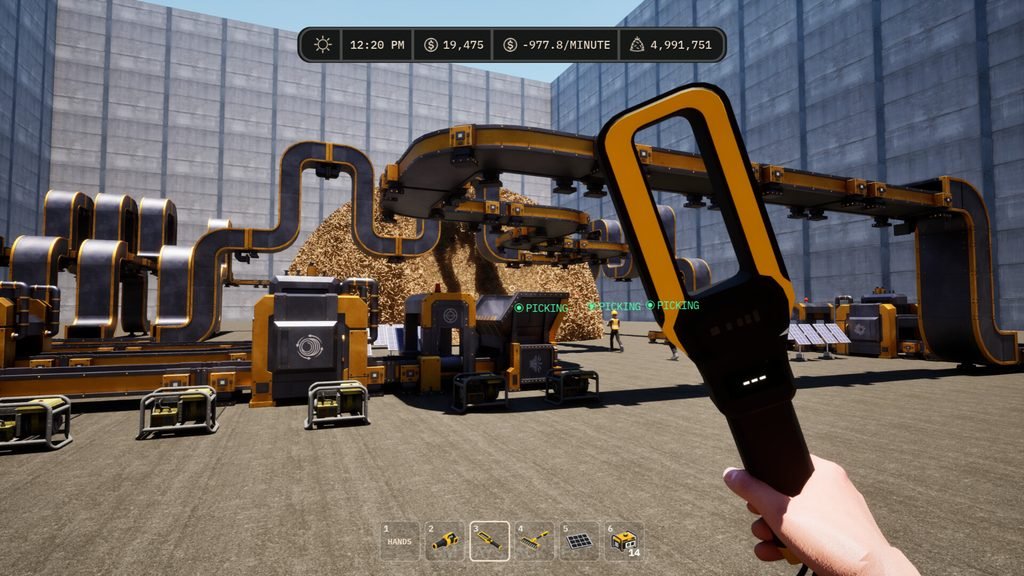
Image source: Steam
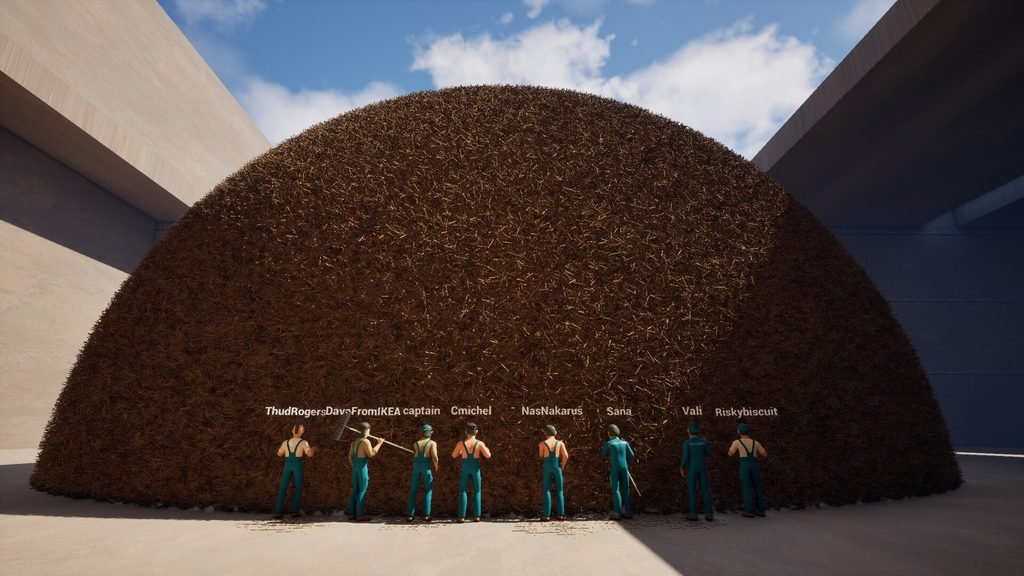
Image source: Steam
Clicking on Thinflow Games’ Steam profile tells the rest of the story immediately. Just six weeks after dropping their haystack clone, the exact same studio released Pet Store: Tidy Up Sorting Simulator, which quickly landed at a Mostly Negative rating too, while already listing another generic simulator, Wall Punch: Escape The Walls Simulator, right behind it. In our view, rushing out thin lookalikes to beat an anticipated indie project to the storefront does not just disappoint buyers; it actively exploits the hype built by developers who are actually taking the time to craft a real game.
Just remember to separate the developer from the publisher. Publishers routinely release dozens of titles made by completely different studios, so a large publisher catalog alone is not proof of an asset flip mill. Start with the developer first to see who actually built the game.
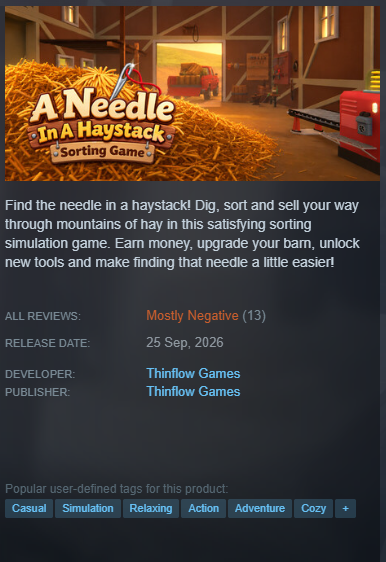
Image source: Steam game page
5. Watch the Trailer for Actual Gameplay
A trailer reveals a lot once you look past flashy editing and dramatic music. Cinematic teasers and animated artwork have their place, yet before spending serious money on an unfamiliar title, you should be able to see what playing it actually looks like.
Look closely for:
- Continuous, unedited gameplay rather than rapid two-second montage cuts.
- Clear examples of core mechanics, combat, exploration, or dialogue systems.
- Visible menus, interfaces, and meaningful player decision-making.
- Moments that show how the world actually reacts to your input.
If the main trailer consists mostly of slow camera pans across static illustrations, check whether the studio has shared real gameplay clips elsewhere. Thirty seconds of honest gameplay tells you more than three minutes of heavily edited promotional hype.
6. Check Steam Discussions and User Reviews
User feedback is one of your strongest safety nets, especially when a pricey or suspiciously timed title comes from an unknown studio.
Skip past the overall percentage score and read what players are actually saying. Are they talking about memorable characters, tight mechanics, and solid pacing, or are they reporting broken systems, missing content, and misleading store pages? Pay attention to playtime as well, since reviews written after several hours usually carry much sharper insights than a five minute joke post.
Looking back at A Needle In A Haystack: Sorting Game shows exactly how much money reading reviews can save you. The game holds a Mostly Negative score on Steam, with only around 23% positive reviews. Players did not just leave empty complaints; they detailed a severe lack of content, missing save mechanics, and the fact that several buyers beat the entire game in roughly four to seven minutes simply by spotting the needle lying on the ground. Even the developer’s own post launch patch notes confirm how unfinished the release was, noting that an update days after launch had to add basic essentials like a main menu, a pause menu, a settings menu, and volume controls.
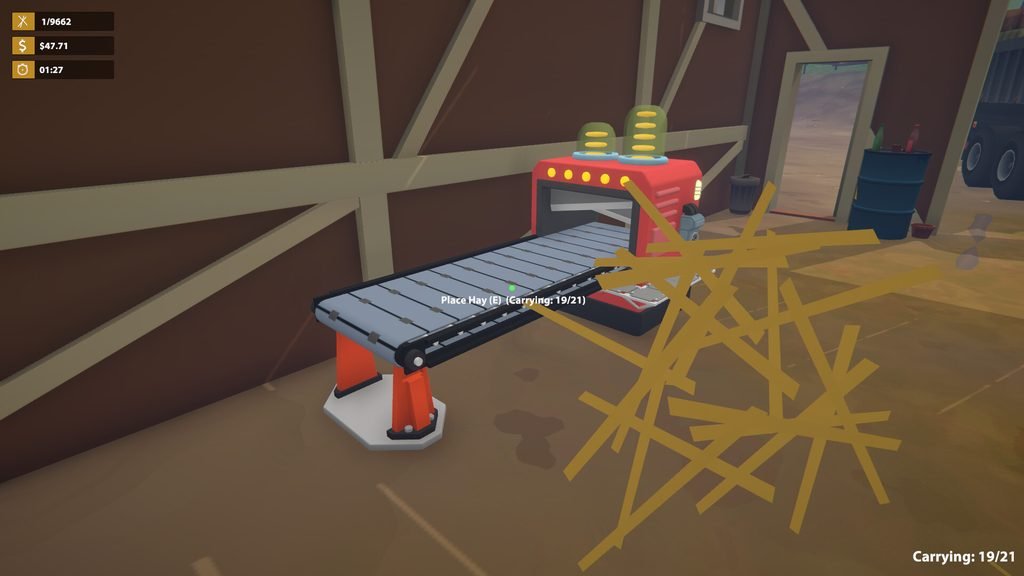
Image source: Steam
When a game receives heavy negative backlash like this, it is rarely unfair hate. Seeing consistent warnings from disappointed buyers is a clear signal that a project shipped half baked to capitalize on the viral buzz around the real Needle In A Haystack Simulator. Checking the Steam Discussions tab reinforces that picture even further, because you can immediately compare an active, transparent community hub against one filled with refund warnings and frustrated players.
Keep in mind that a brand new release or niche indie title might naturally have very few reviews. An empty review section is not proof of bad quality, yet when a game costs $99.99 or looks suspiciously close to an upcoming viral hit, waiting for honest community impressions is simply smart shopping.
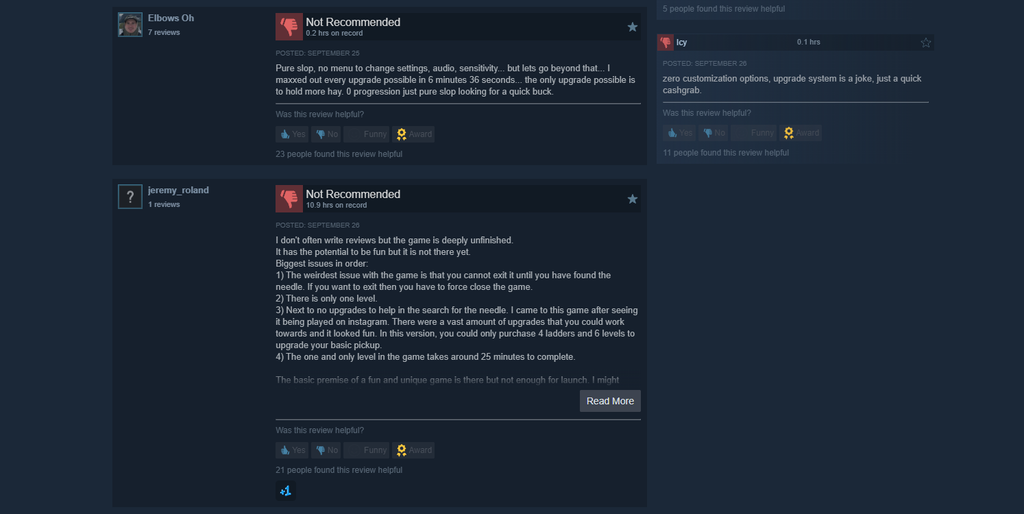
Image source: Steam reviews
7. Think About the Price, Not Just the AI
This is arguably the most important lesson from releases like Blood in the Ice, KRYONULL, and Typical NPC.
Using AI-generated images or voices is not automatically a crime, and a small visual novel with a modest file size can still be fantastic if its story, characters, and writing truly shine. Plenty of solo developers create unforgettable experiences that punch far above their budget.
The real friction begins when an asking price sets expectations that the visible product fails to justify. While handcrafted games carry a unique human touch that players rightfully treasure, every game ultimately gets judged by the complete experience it delivers for the price.
A $99.99 tag is a major commitment for almost any player. At that level, customers have every right to expect a clear, compelling reason why the game is worth buying, whether through extraordinary writing, deep replayability, innovative mechanics, or standout direction. When a title leans heavily on generated assets, reveals almost nothing about its gameplay, and demands flagship pricing, questioning its value is completely fair.
What Is Our Opinion
At Spawnzone, we recognize that AI is already becoming an undeniable part of modern creative workflows, and it is completely normal that some players enjoy experimenting with AI-driven media. Because there is an audience for it, this technology is clearly here to stay as part of the future of entertainment.
We also understand that indie developers often juggle tight budgets, tiny teams, and brutal schedules. AI can serve as a practical tool that helps with repetitive groundwork, and using it does not automatically erase the real effort required to design, program, write, and polish a finished game.
Even with that balance in mind, we want to be completely clear about where Spawnzone stands. AI should remain a supporting tool, not a shortcut to churn out lifeless projects and pass them off as original artistry. Releases like Blood in the Ice, KRYONULL, and Typical NPC put a spotlight on a question that matters to every player: what are you genuinely getting for $100? We do not need to assume bad faith or call a game a scam to point out when a price tag makes no sense for what is being shown.
What Spawnzone firmly opposes is deceptive marketing, stolen creative work, blatant attempts to clone existing hits, and fully AI-generated shovelware offered without real value in return. We will always stand behind affected indie creators in whatever way we can, and we will never hesitate to criticize projects that rely heavily on AI while hiding that usage from players.
A Quick Checklist Before Buying an Unfamiliar Steam Game
Before clicking the purchase button on a release that raises doubts, run through these seven quick checks:
- Compare the artwork: Does the store banner genuinely match the in-game screenshots?
- Read the description: Does it explain concrete gameplay mechanics instead of empty buzzwords?
- Check the AI disclosure: What parts were generated, and how transparently did the studio explain it?
- Investigate the developer: Do they have a real catalog and a clear creative direction?
- Watch real footage: Can you actually see continuous gameplay in action?
- Read community feedback: Are players discussing meaningful strengths, or warning others away?
- Evaluate the price: Does the visible content and quality truly justify what the developer is asking?
No single warning sign proves that a game is an asset flip or that a studio took dishonest shortcuts. When several of them stack up on the same store page, however, pausing to do extra research can save your wallet.
Steam is packed with brilliant indie developers who pour years of passion into their work and deserve every bit of support they get. The goal is never to punish developers for trying new tools or bold ideas. The goal is to make sure players know what they are buying, creative work is respected, and every price tag reflects the real experience behind it.
AI is a tool. The finished game is the product. And players should judge it accordingly.


No comments yet
Be the first to share your opinion on this article.